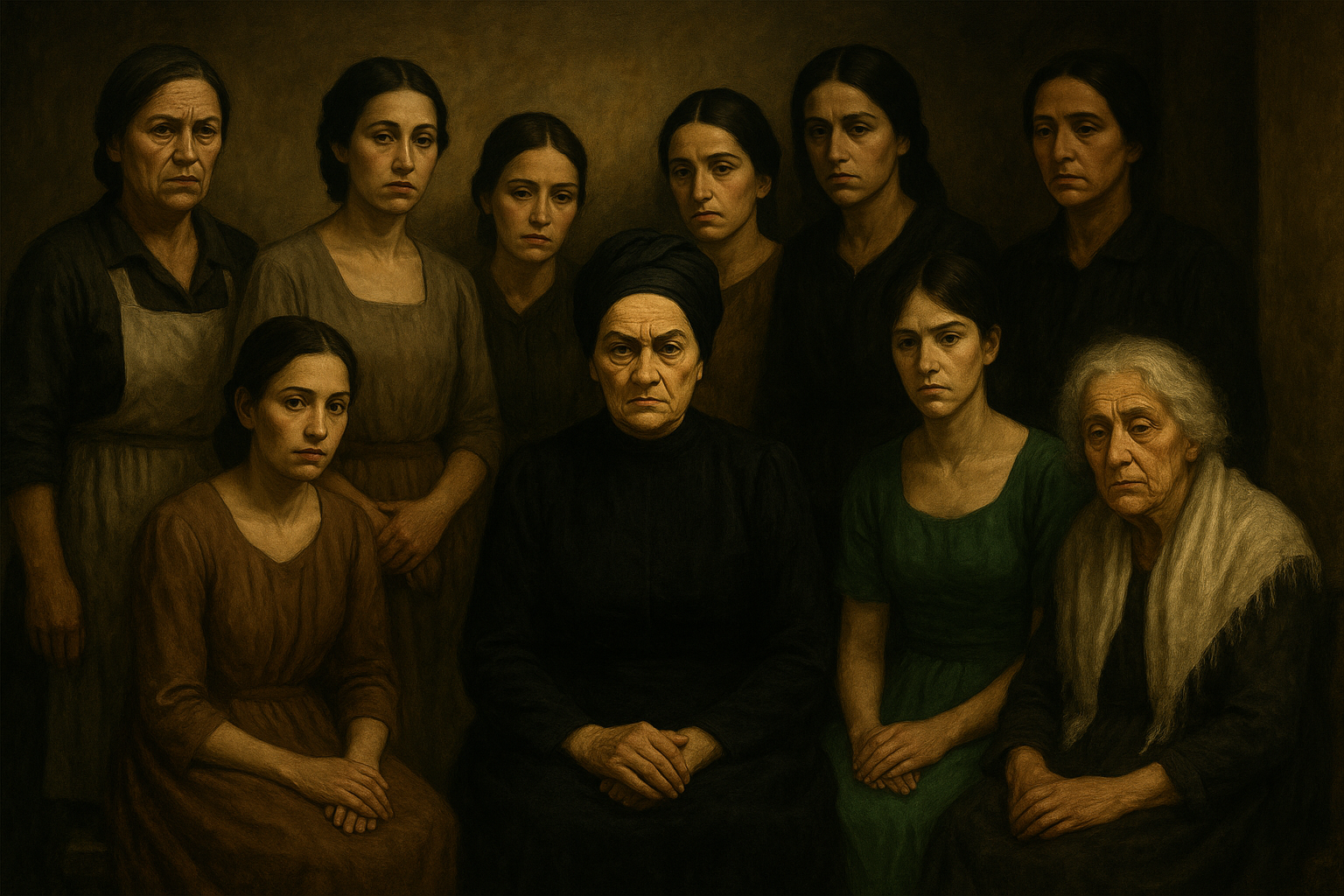
The gentle and quiet daughter who often remains in the background. Amelia symbolizes submission and the overlooked presence of women whose desires are silenced by tradition and fear.
🔍 Character Analysis: Amelia
Amelia, the third daughter in the Alba household, is often the most reserved and gentle among her sisters. She rarely speaks out or asserts herself, choosing instead to remain in the background, observing the tensions without directly engaging in them. Her submissive nature and soft demeanor highlight the quieter forms of repression faced by women in traditional societies those who are not necessarily rebellious or outspoken, but who still suffer deeply under the weight of expectation and silence. Amelia’s presence serves to amplify the contrast between the louder conflicts in the house and the quiet emotional toll borne by the more introverted characters.
Though she doesn’t play a central role in the unfolding drama, Amelia’s reactions to her sisters’ turmoil reveal her inner anxiety and vulnerability. She is particularly sensitive to the emotional atmosphere, and her few lines often reflect an awareness of the injustice surrounding them—even if she feels powerless to resist it. Through Amelia, Lorca gives voice to the many women who endure in silence, internalizing their fears and desires, and ultimately becoming casualties of a system that denies them agency without ever making them villains or heroes.
🎭 Meet [Name], the Actress Behind Amelia
Lorem ipsum dolor sit amet, consectetur adipiscing elit. Ut elit tellus, luctus nec ullamcorper mattis, pulvinar dapibus leo.