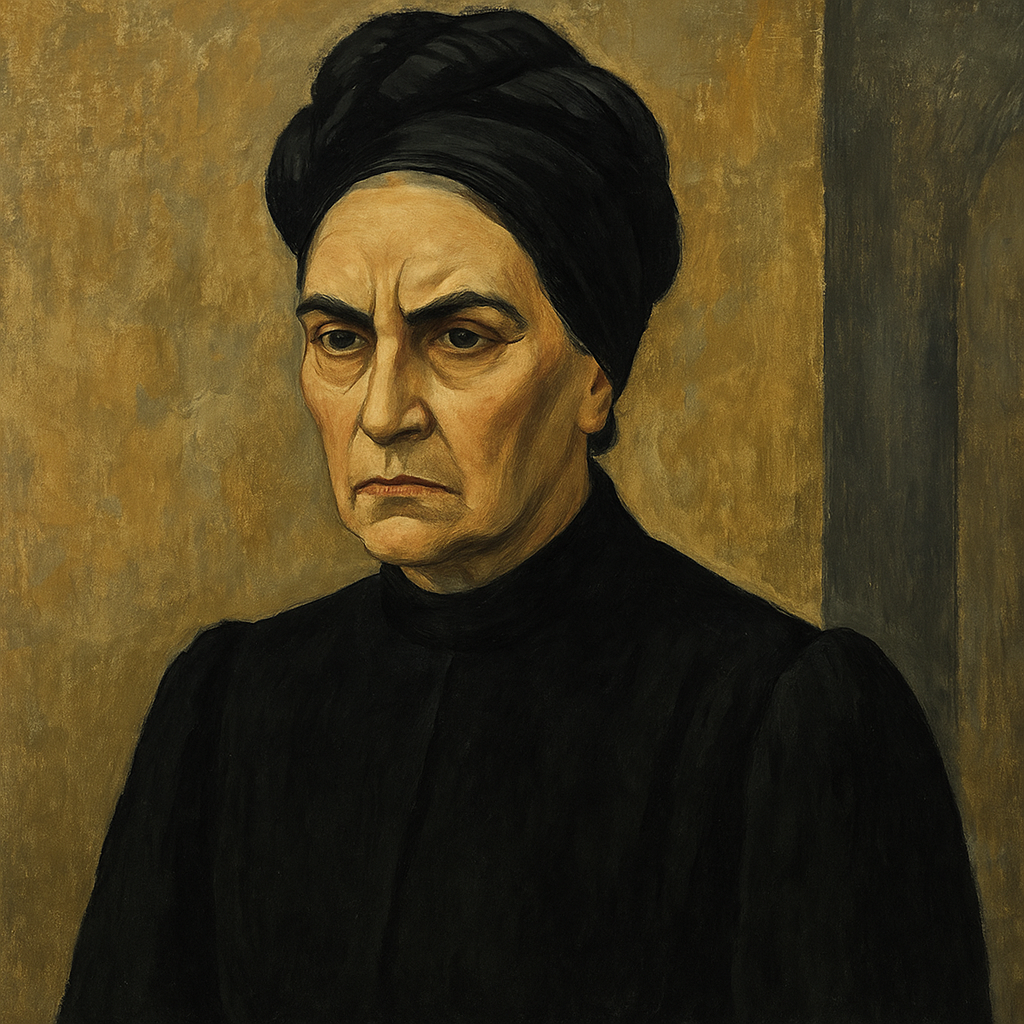
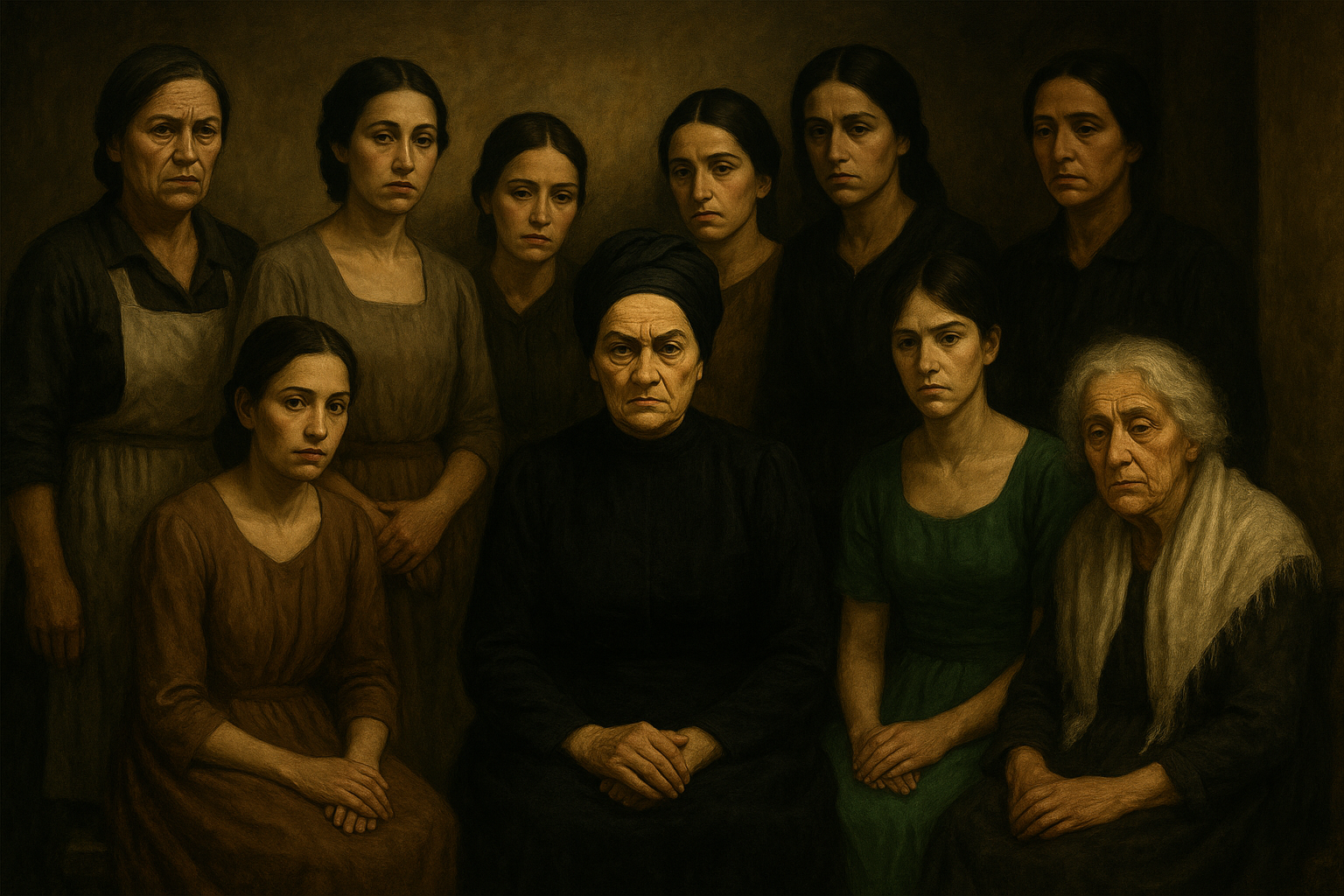
A domineering widow who imposes strict rules of silence and repression on her household. Bernarda embodies authority, control, and tradition, turning her home into a prison of fear and obedience.
🔍 Character Analysis: Bernarda Alba
The Matriarch of Silence and Control
Bernarda Alba stands as the unyielding pillar of authority in Federico García Lorca’s The House of Bernarda Alba. As the recently widowed mother of five daughters, she enforces a strict eight-year mourning period, a symbol of both societal expectation and personal rigidity. Her obsession with honor, reputation, and order turns the household into a suffocating prison. Bernarda is not merely a tyrant — she is the embodiment of a system that crushes individuality, especially that of women, under the weight of tradition and control.
Yet, beneath her rigid exterior lies a complex portrait of fear and vulnerability. Bernarda fears scandal, but perhaps more profoundly, she fears the chaos of freedom — for her daughters and for herself. Her iron will masks a deep anxiety about maintaining structure in a world that is rapidly changing. In Lorca’s tragic world, Bernarda is both victim and enforcer of repression, making her not just a symbol of authority, but also a tragic figure whose denial of emotional truth leads to destruction.
🎭 Meet [Name], the Actress Behind Bernarda Alba
Lorem ipsum dolor sit amet, consectetur adipiscing elit. Ut elit tellus, luctus nec ullamcorper mattis, pulvinar dapibus leo.