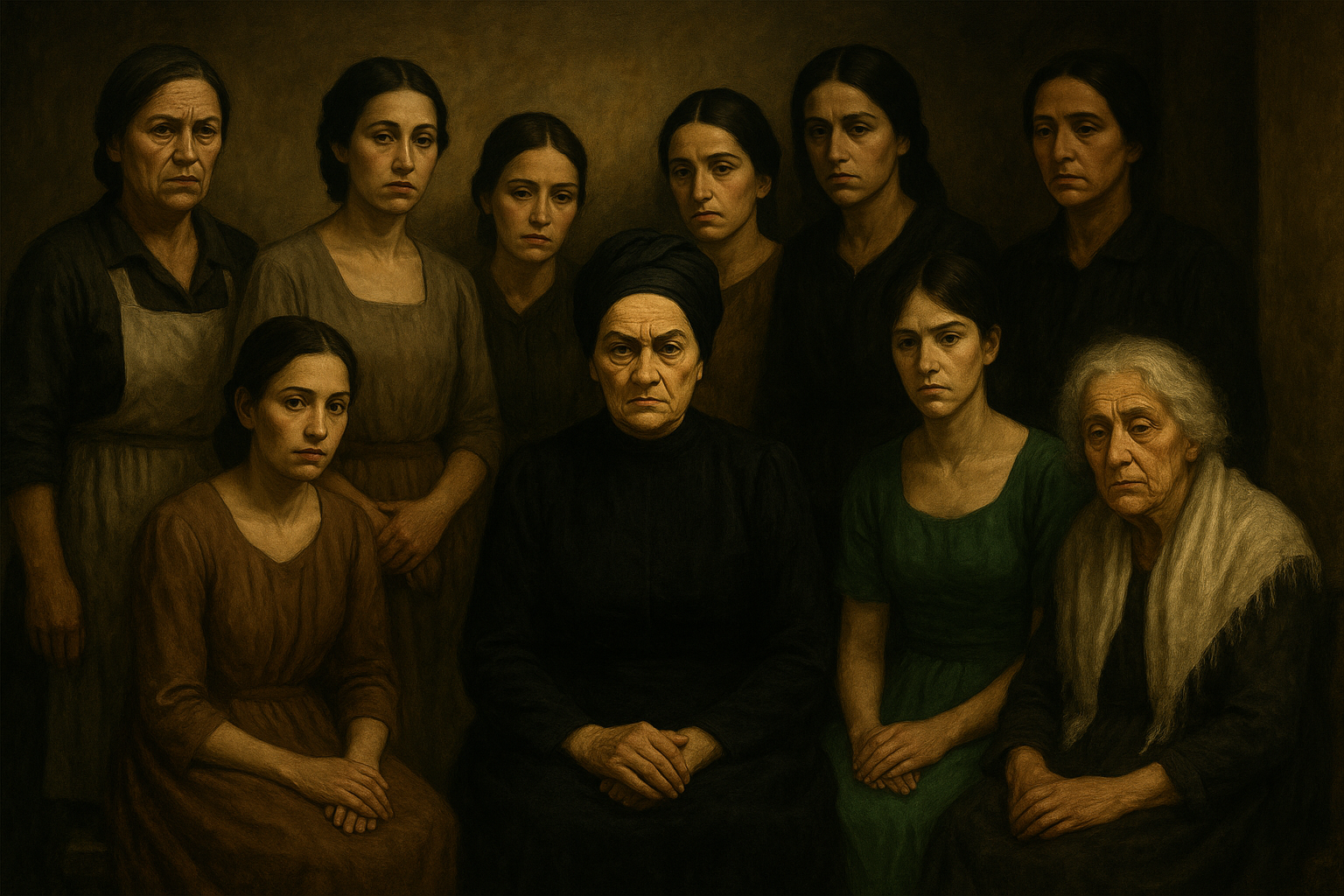
The eccentric grandmother, dismissed as mad, yet her voice speaks truth. María Josefa dreams of love, freedom, and escape, becoming the symbolic conscience of the household.
🔍 Character Analysis: María Josefa
María Josefa, the elderly mother of Bernarda Alba, may seem eccentric or mentally unstable at first glance, but her role in the play is far more symbolic and profound. Locked away from the outside world, she frequently escapes confinement to speak her mind, often in poetic and surreal outbursts that reveal deep truths. Her longing for freedom, love, and a return to youthful joy starkly contrasts with the suffocating atmosphere of the house, making her a poignant voice of resistance against repression.
Though dismissed by Bernarda and the household as mad, María Josefa serves as a prophetic figure. Her ramblings expose the underlying tensions and emotional starvation in the house, especially among the daughters. She symbolizes the cost of societal oppression, not only on the young but also on those who have spent a lifetime under its weight. In her madness, she possesses clarity, acting as a mirror that reflects the tragic inevitability of what is to come.
🎭 Meet [Name], the Actress Behind María Josefa
Lorem ipsum dolor sit amet, consectetur adipiscing elit. Ut elit tellus, luctus nec ullamcorper mattis, pulvinar dapibus leo.